NSW Property Hotspots: Where Buyer Demand Is Rising
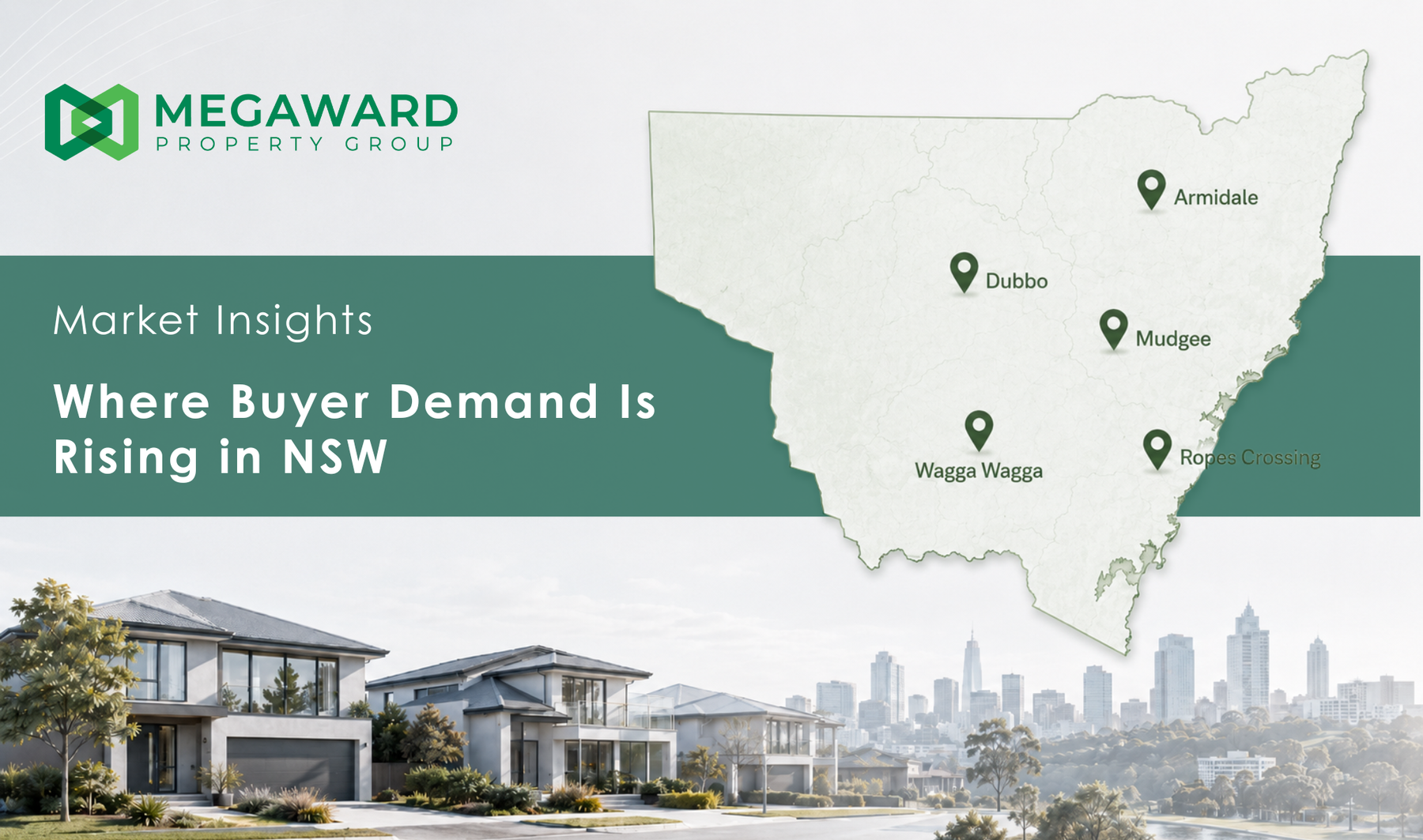
Discover the NSW suburbs recording strong growth in buyer enquiries in 2026, including Wagga Wagga, Dubbo, Armidale, Mudgee and Ropes Crossing.
Where Is Buyer Demand Rising in NSW?
Property Hotspots to Watch in 2026
Australia’s property market is rarely defined by a single trend.
While some markets are experiencing softer auction results, affordability pressure and more cautious investor activity, buyer demand is increasing sharply in selected suburbs. In New South Wales, the strongest growth in property enquiries is being recorded across a mix of regional cities, established residential areas and more affordable parts of Greater Sydney.
Recent PropTrack data reported by realestate.com.au identified 40 Australian suburbs with the largest year-on-year increases in enquiries per property listing. Several NSW locations featured prominently, including Glenfield Park, Dubbo, Westdale, Armidale, Mudgee and Ropes Crossing.
Rather than simply presenting a list of “property hotspots”, it is important to understand what the data measures, why buyers may be targeting these areas and what rising demand could mean for buyers, sellers and property investors.
What Does an Increase in Buyer Enquiries Mean?
The PropTrack analysis examined the average number of high-intent enquiries received per property listing during the 12 months to June 2026.
These enquiries included actions such as:
contacting the selling agent by phone;
submitting an online enquiry;
emailing the agent; and
downloading property documents.
The results were ranked by the year-on-year percentage change in enquiries per listing. Suburbs with fewer than 30 listings during the measurement period were excluded from the analysis.
This distinction matters. The figures do not show that property prices have doubled or that every home in these suburbs will experience strong capital growth. Instead, they indicate that considerably more buyers are actively engaging with available properties than they were one year earlier.
Buyer enquiry can provide an early indication of changing demand. However, it should be assessed alongside property supply, local employment, rental conditions, infrastructure, borrowing capacity and the quality of individual properties.
NSW Suburbs Recording Stronger Demand for Houses
Three regional NSW suburbs appeared among the 30 Australian locations with the largest increases in house enquiries.

*Median values shown in the original PropTrack analysis were automated valuation model estimates rather than individual sale prices.
Glenfield Park and the Wagga Wagga Property Market
Glenfield Park recorded the strongest increase in house enquiries among the NSW suburbs included in the national house ranking, with demand rising by 139% year on year.
Located in Wagga Wagga, Glenfield Park offers established housing, access to local amenities and a price point that remains below many parts of Greater Sydney.
Wagga Wagga also has a relatively diverse regional economy supported by industries including defence, healthcare, education, agriculture and transport. The combination of employment diversity, rental demand and more attainable house prices can attract owner-occupiers, first-home buyers and property investors.
For buyers researching Wagga Wagga real estate, the increase in enquiries suggests that competition may be strengthening. However, conditions can vary considerably between neighbourhoods, property types and price brackets.
Dubbo Buyer Demand Increased by 124%
Dubbo recorded a 124% annual increase in enquiries per house listing.
As one of the major service centres in regional NSW, Dubbo attracts buyers seeking larger homes and comparatively accessible prices. The city services a broad surrounding region and has established employment across healthcare, education, retail, government services, agriculture and logistics.
Growing enquiry levels may benefit sellers by increasing the number of potential purchasers viewing and comparing properties. For buyers, they reinforce the importance of arranging finance early, researching comparable sales and completing building, pest and legal due diligence before making an offer.
Westdale Enquiries Rose by 117%
Westdale, located in the New England and North West region, recorded a 117% increase in house enquiries per listing.
Smaller regional suburbs can experience significant changes in enquiry when the number of available properties is limited. Buyers should therefore consider both the percentage increase and the underlying volume of listings.
A sharp rise in interest can be meaningful, but it does not remove the need to examine local supply, resale demand, flood or bushfire risk, planned infrastructure and the condition of the individual property.
NSW Suburbs Recording Higher Unit Demand
NSW performed particularly strongly in the national unit ranking. Three NSW suburbs appeared in the top five locations for annual growth in unit enquiries.

*Figures are based on PropTrack automated valuation model estimates published in the original analysis.
Armidale Units Attract More Buyer Attention
Unit enquiries in Armidale increased by 130% over the year, making it the highest-ranked NSW suburb in the national unit list.
With a median unit value of approximately $403,000 in the PropTrack dataset, Armidale may appeal to buyers who have been priced out of larger metropolitan markets.
The presence of education, healthcare and regional services may also create demand from students, professionals, local residents and tenants. Nevertheless, investors should investigate the specific tenant profile, vacancy rate, strata costs and ongoing supply of new units before purchasing.
Ropes Crossing Highlights Demand Within Greater Sydney
Ropes Crossing recorded a 116% increase in unit enquiries, showing that rising buyer activity is not limited to regional NSW.
Located within the Blacktown region of Greater Sydney, Ropes Crossing provides an alternative for buyers seeking access to the Sydney property market without paying inner-city or established middle-ring prices.
This reflects a broader affordability trade-off. Some buyers are prepared to live further from the Sydney CBD in exchange for newer housing, additional space or a lower entry price.
When comparing properties in outer Sydney suburbs, buyers should consider commuting time, access to public transport, local schools, shopping facilities, future development and the supply of similar properties nearby.
Mudgee Unit Enquiries Increased by 115%
Mudgee recorded a 115% increase in unit enquiries.
The town is known for its lifestyle appeal, tourism economy and established regional services. These characteristics may attract local downsizers, investors, first-home buyers and purchasers relocating from larger cities.
However, lifestyle popularity alone should not determine an investment decision. Buyers should distinguish between permanent rental demand, short-term accommodation demand and owner-occupier demand, as each segment can respond differently to economic and regulatory changes.
Why Are Buyers Looking Beyond Traditional Sydney Hotspots?
The NSW results point to several themes shaping buyer behaviour in 2026.
1. Housing Affordability
Higher borrowing costs can reduce the amount purchasers are able or willing to borrow. This often encourages buyers to widen their search area or consider a different property type.
A buyer who cannot afford a freestanding home in Sydney may instead compare:
an apartment or townhouse in Greater Sydney;
a house in an outer metropolitan suburb;
a regional investment property; or
a home in a major regional centre.
The suburbs identified in the PropTrack analysis generally offered more accessible price points than premium capital-city markets. The original research also noted that affordable markets can be less sensitive to interest-rate pressure than higher-priced locations.
2. Diverse Regional Economies
Regional cities supported by several major industries may be more attractive than areas dependent on one employer or economic sector.
Healthcare, education, defence, government services, agriculture, transport and logistics can all contribute to local employment and housing demand.
This does not guarantee capital growth, but employment diversity can provide a more stable foundation for both owner-occupier and rental demand.
3. Limited Properties Available for Sale
Buyer competition can increase when the number of interested purchasers grows faster than the number of homes being listed.
Regional housing supply remains an important issue for NSW. The NSW Government has set a target of 55,000 new homes for regional NSW as part of its broader housing delivery program.
New supply can help address long-term housing needs, although planning approvals, infrastructure delivery and construction timeframes mean conditions will differ between individual towns and local government areas.
4. Lifestyle and Flexible Location Choices
Regional Australia added approximately 94,700 residents during the 2024–25 financial year, representing growth of 1.1%.
Flexible working arrangements, lifestyle preferences and the search for more space may continue to influence where some households choose to live. However, buyers should confirm whether population growth is occurring in the specific suburb they are considering rather than relying on national or statewide trends.
What Does Rising Demand Mean for NSW Property Buyers?
Higher enquiry levels may lead to more competition, particularly for renovated homes, properties in convenient locations and listings priced within popular first-home buyer or investor budgets.
Before purchasing, buyers should consider:
recent comparable sales rather than advertised prices;
the number of similar properties currently for sale;
local population and employment trends;
transport and infrastructure;
building and pest inspection findings;
strata records for apartments and townhouses;
insurance costs and environmental risks;
rental vacancy rates and achievable rent; and
the property’s long-term suitability and resale appeal.
A suburb-level trend should be treated as the beginning of the research process, not the final reason to purchase.
What Should NSW Property Investors Consider?
For investors, growing buyer enquiries can indicate improving market attention, but enquiry growth is not the same as rental demand or investment return.
An investment property should be assessed using property-specific figures, including:
purchase price and acquisition costs;
expected rental income;
property management fees;
council and water rates;
strata levies;
insurance and maintenance costs;
vacancy allowance;
potential land tax implications; and
the investor’s finance and tax position.
Investors should also examine whether rental demand is supported by permanent residents, local employment and limited rental supply.
Areas driven primarily by tourism, temporary projects or one large employer may carry different risks from established regional centres with diversified economies.
What Does the Data Mean for NSW Property Sellers?
For sellers in suburbs experiencing increased buyer activity, the data may indicate a larger pool of active purchasers.
However, strong suburb-level demand does not mean every property should be priced above recent comparable sales. Buyers can still reject an overpriced listing, particularly when borrowing capacity is constrained.
An effective sales campaign should focus on:
accurate pricing based on current comparable sales;
high-quality photography and property presentation;
clear communication of the home’s location and lifestyle benefits;
an inspection schedule suited to the target market; and
timely follow-up with genuine buyers.
The quality of enquiries is ultimately more important than the total number received.
Are These the Best NSW Suburbs to Invest In?
The results identify where buyer enquiries have increased most rapidly. They do not provide a definitive ranking of the best places to buy property in NSW.
Rapid enquiry growth may contribute to stronger price resilience, but property values can also be affected by interest rates, credit conditions, employment, supply, investor participation and changes in government policy. PropTrack’s analysis similarly cautioned that tighter lending conditions and reduced investor activity could limit price growth.
Buyers should avoid purchasing solely because a suburb appears on a property hotspot list. A well-located, functional property purchased at a reasonable price may offer better long-term prospects than a compromised property in a suburb receiving temporary media attention.
Understanding the NSW Property Market in 2026
The latest buyer enquiry data demonstrates that demand across NSW is becoming increasingly selective.
Affordability, employment diversity, rental demand, available housing supply and lifestyle considerations are directing more attention towards regional cities such as Wagga Wagga, Dubbo, Armidale and Mudgee. At the same time, the strong result for Ropes Crossing shows that outer Sydney markets can also benefit when buyers search for more attainable options within Greater Sydney.
For buyers and investors, the key is not simply identifying where enquiries are rising. It is understanding why demand is increasing, whether the underlying drivers are sustainable and whether the individual property supports the purchaser’s financial and lifestyle objectives.
For sellers, changing enquiry levels highlight the importance of using current local evidence when developing a pricing and marketing strategy.
Megaward assists property owners, buyers and investors with navigating opportunities across Sydney and New South Wales. Contact the Megaward team to discuss your property goals and current market conditions.
Data Source
This article was independently written by Megaward using buyer enquiry data from PropTrack, as reported by realestate.com.au in “Double the demand: 40 suburbs buyers are clamouring to get into”, first published on 22 July 2026 and subsequently updated. The original dataset ranked suburbs by the year-on-year change in enquiries per listing during the 12 months to June 2026 and excluded suburbs with fewer than 30 listings.
Additional housing supply information was sourced from the NSW Department of Planning, Housing and Infrastructure, while population data was sourced from the Australian Bureau of Statistics.
Disclaimer: This article provides general property market information only. It does not constitute financial, legal, tax or investment advice. Property purchasers should obtain independent professional advice and complete their own due diligence before making a decision.